
摘要:为应对全球气候变化的严峻挑战,我国提出了“碳达峰、碳中和”的“双碳”战略目标。深地能源开采、二氧化碳地质封存、深地能源存储和废弃矿井再利用等深地工程为实现“双碳”目标提供了重要技术路径。深入揭示上地壳广泛存在的裂隙和断层(本文统称为岩体界面)的摩擦-渗流耦合演化机制对深地工程的安全高效开展具有重要意义。本文综述了岩体界面的摩擦-渗流耦合机理和调控技术的研究历史和现状,并对未来的研究重点与发展方向提出了建议。首先,简要介绍了岩体界面在当代深地工程中的关键作用;然后,系统梳理了岩体界面的摩擦与渗流特性及其耦合演化机理的基础理论;最后,总结了流体注采诱发地震的主要机制,阐述了与深地能源开采中的储层增渗和深地流体存储中的泄漏相关的机理与挑战,并介绍了当前主要的调控技术。通过对现有研究的系统梳理,本文指出,粘土对岩体界面的摩擦-渗流耦合特性的影响、恒法向刚度条件下岩体界面的摩擦-渗流耦合演化模式以及水力压裂诱发张裂隙的粘裂扩展机理等仍有待厘清。此外,多级水力压裂、机器学习以及分布式光纤传感技术的发展有望为预测并调控深地能源开采的储层增渗效果、深地流体存储的泄漏风险以及各类深地工程的诱发地震风险提供更加高效且智能化的解决路径。
来 源:《采矿与岩层控制工程学报》2025年
作 者:冀胤霖1,2, 张苏鹏1, 朱鸿鹄1,2, 张振宇3, 宋先知4, 王勤1,2
单 位:1. 南京大学, 地球科学与工程学院, 江苏 南京 210023; 2. 江苏省大地感知与控灾工程研究中心,江苏 南京 210023; 3. 重庆大学, 煤矿灾害动力学与控制全国重点实验室, 重庆 400044; 4. 中国石油大学(北京), 深层地热富集机理与高效开发全国重点实验室, 北京 102249
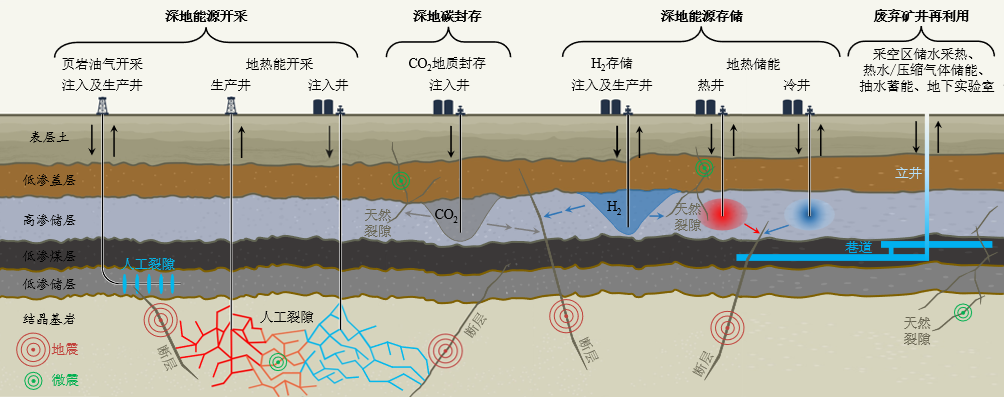
图1 面向“双碳”战略的当代深地工程
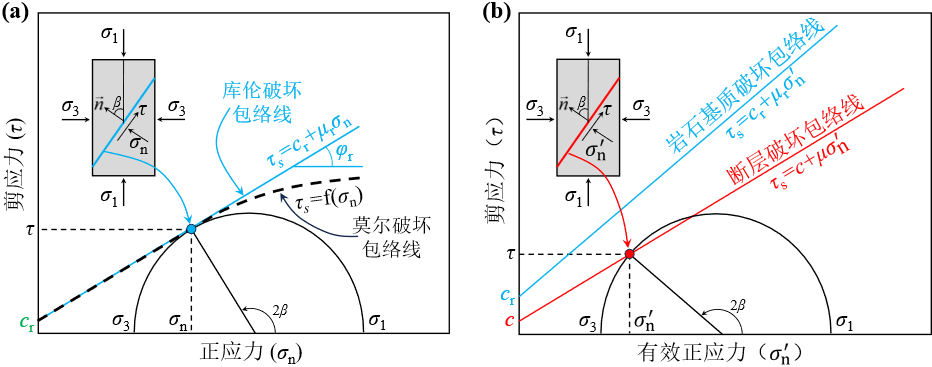
图2 忽略中间主应力的莫尔-库伦破坏准则
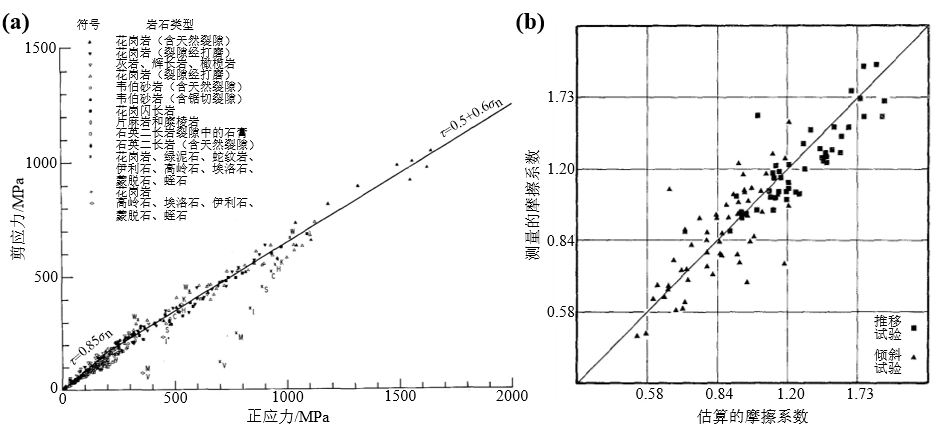
图3 岩石裂隙的摩擦系数
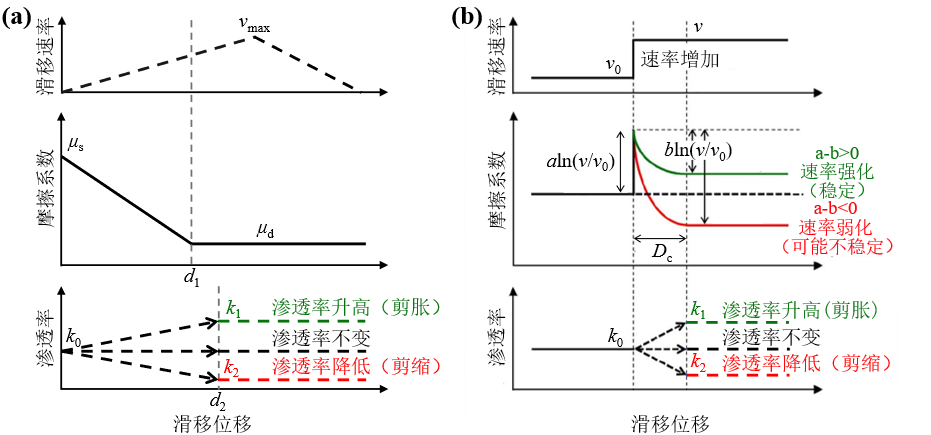
图4 滑移期间岩体界面摩擦系数与渗透率的耦合演化关系
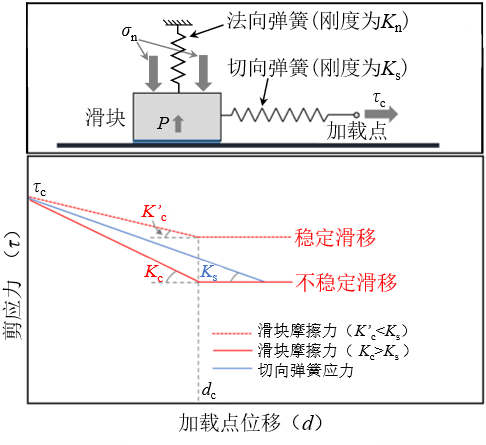
图5 模拟临界剪应力条件下岩体界面滑移行为的弹簧-滑块模型,以及滑移过程中岩体界面的剪应力和抗剪强度的演化
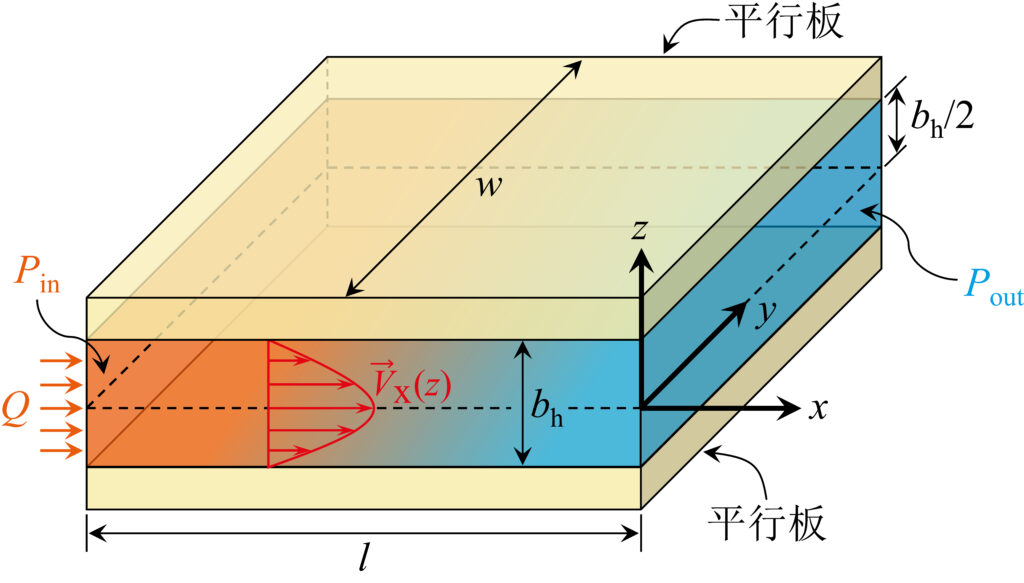
图6 具有光滑表面的平行板模型
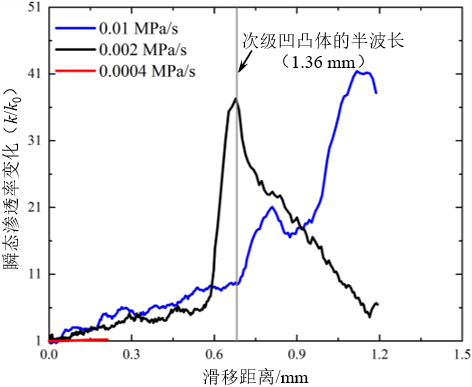
图7 流体注入诱发裂隙滑移试验中不同增压速率条件下裂隙的瞬态渗透率随滑移距离的演化
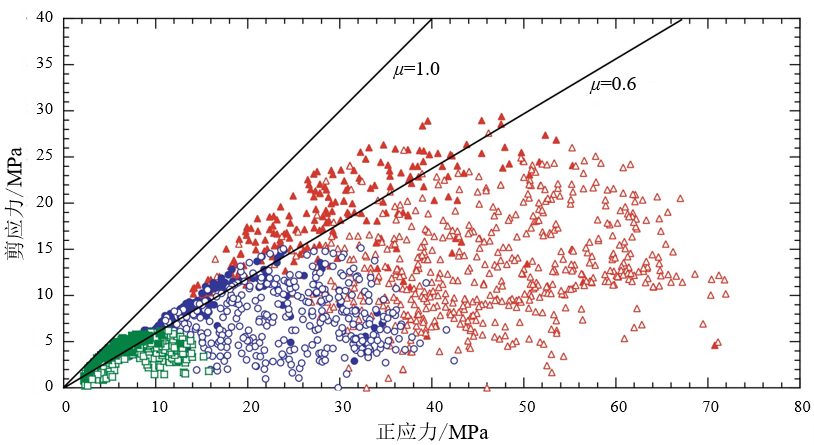
图8 实测岩体界面的原位剪应力与正应力
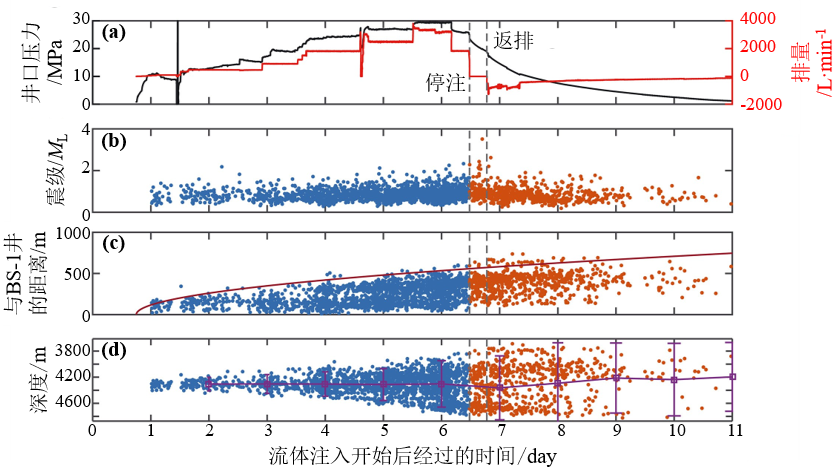
图9 2006 年12 月2 日至3 日期间瑞士Basel EGS 现场的水压致裂数据
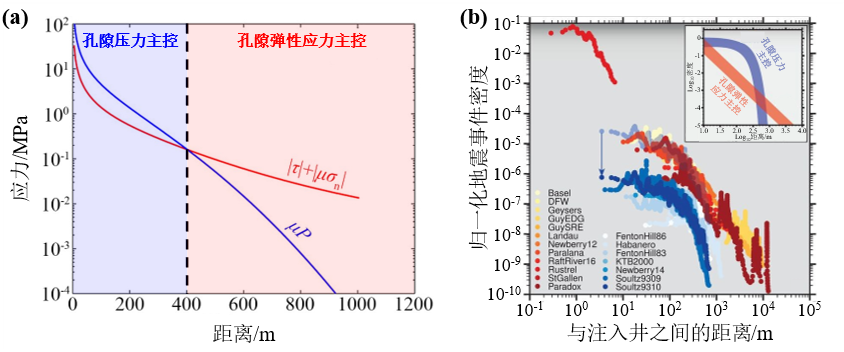
图10 流体压力扩散和孔隙弹性应力变化对诱发地震的作用
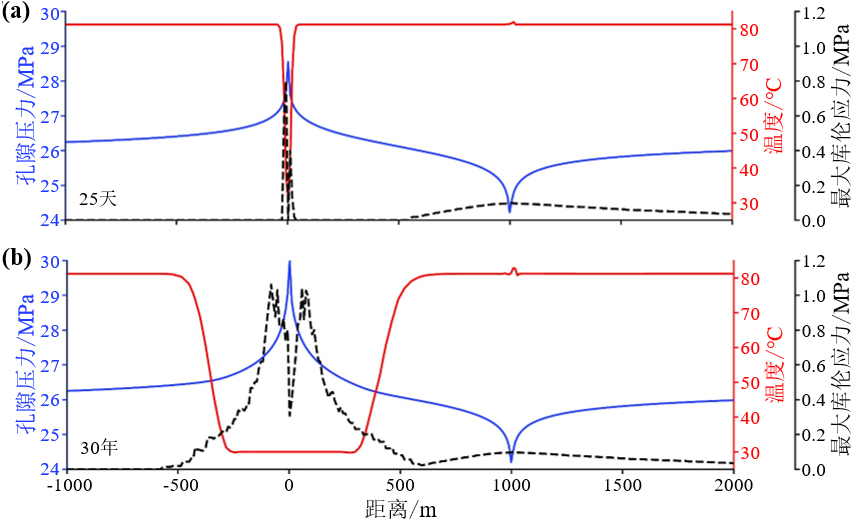
图12 砂岩储层中的双井地热系统在流体注采作业中的孔隙压力、温度和库伦应力最大变化量的演化
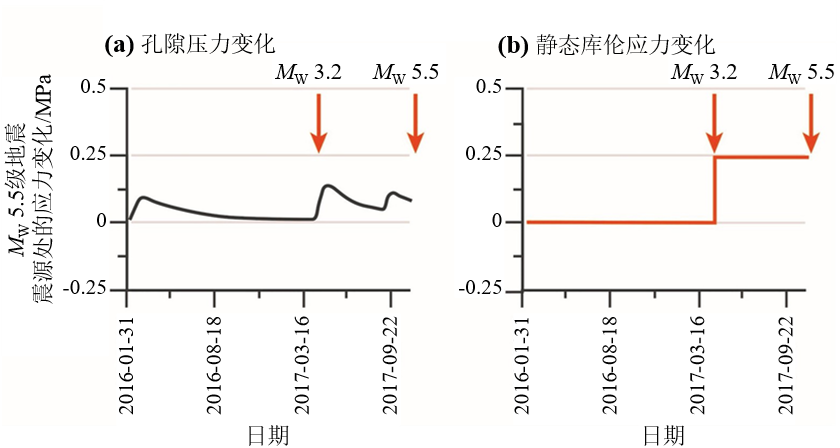
图13 韩国浦项EGS 现场MW 5.5 级地震震源处的孔隙压力和静态库伦应力演化
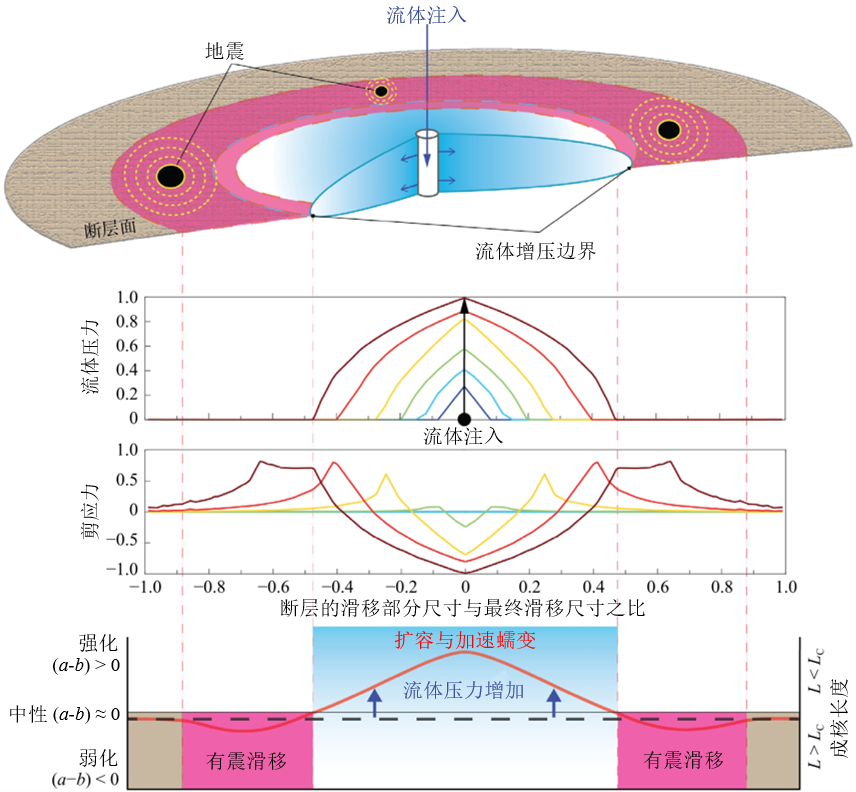
图14 实验和数值模拟揭示的由流体注入引起的无震滑移导致的剪应力转移诱发地震机制示意图
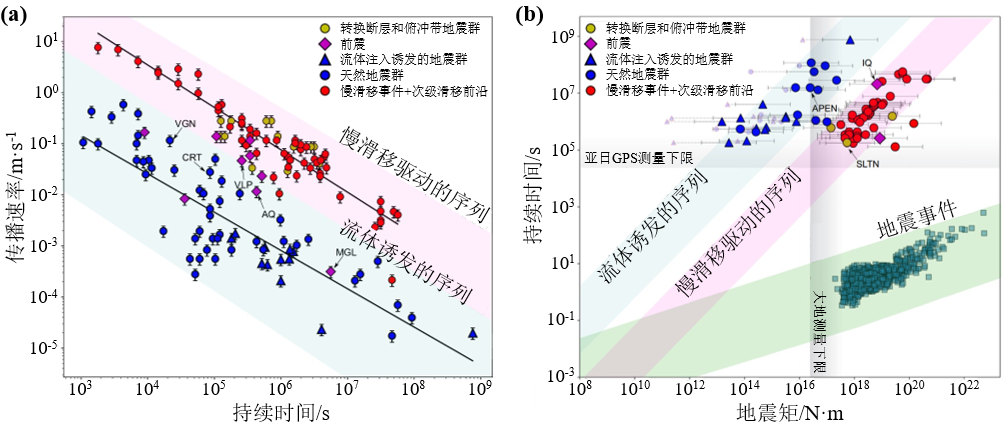
图15 各种地震活动的(a)传播速率与持续时间以及(b)持续时间与地震矩之间的关系
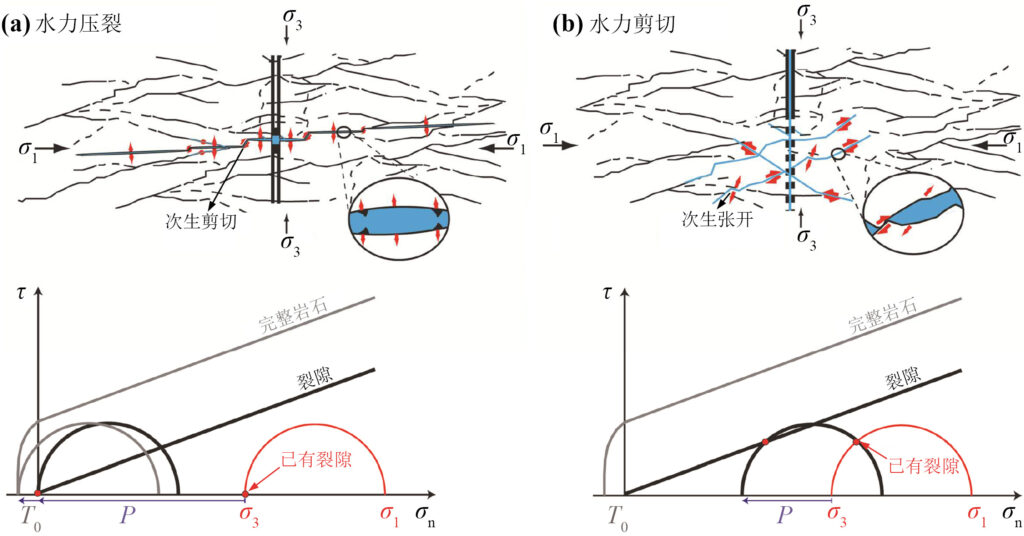
图16 水压致裂的物理过程示意图
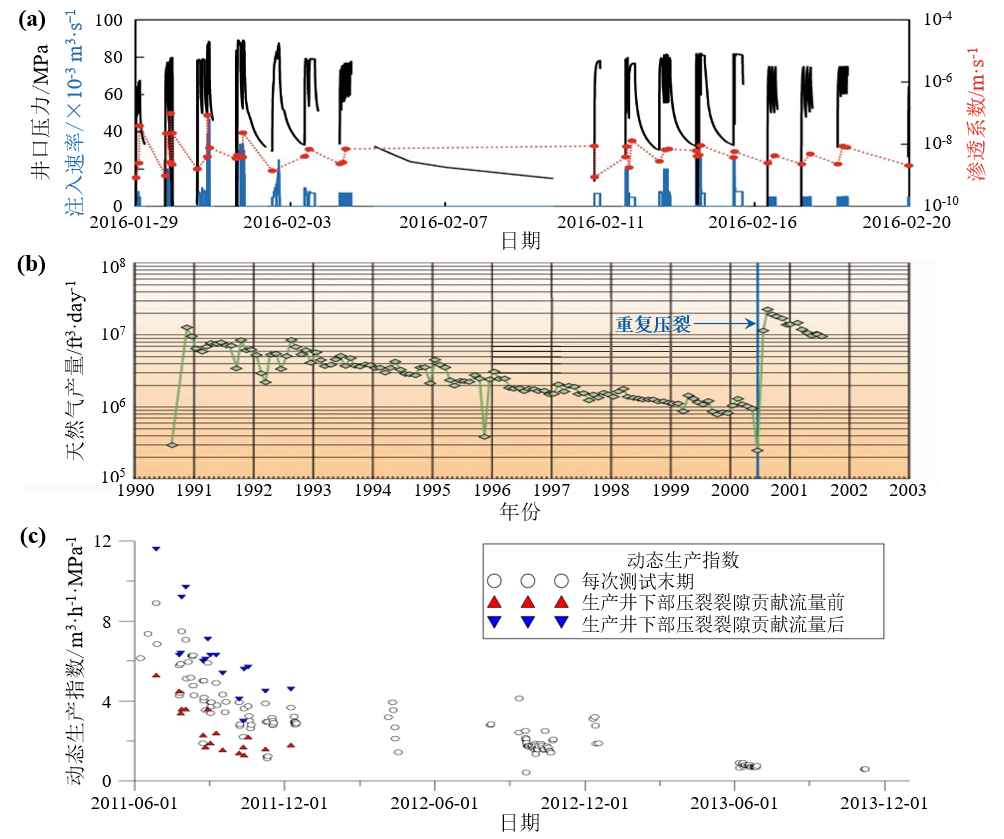
图17 深地能源储层中水压致裂的增渗效果
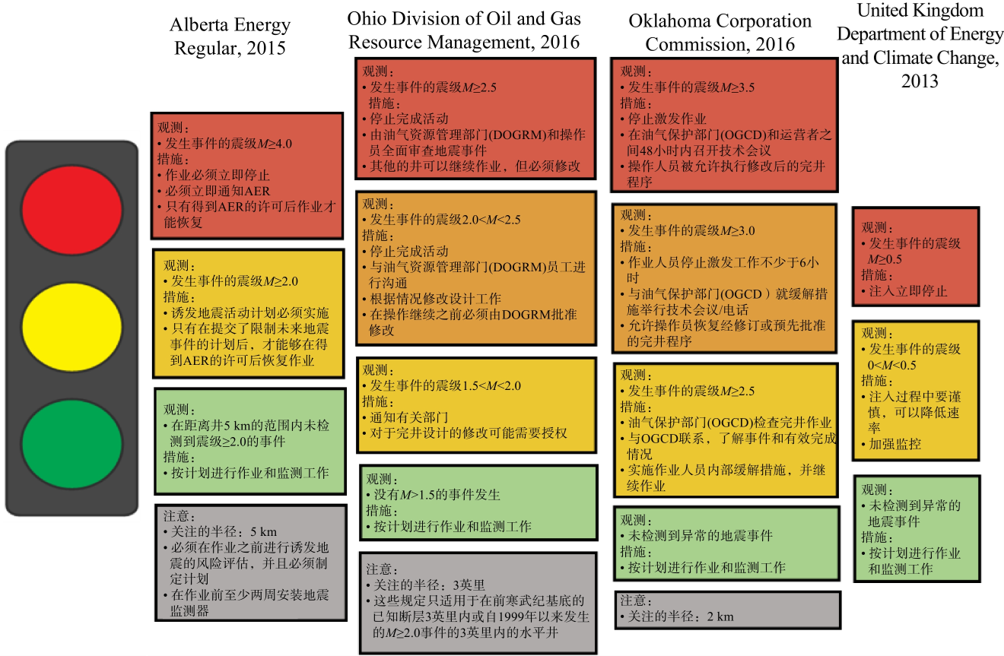
图18 适用于不同地区的红绿灯系统
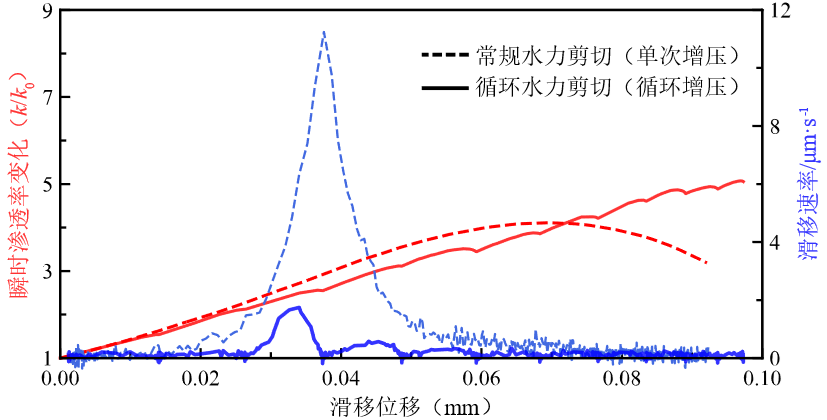
图19 单次与循环水力剪切条件下天然粗糙花岗岩裂隙的渗透率和滑移速率演化
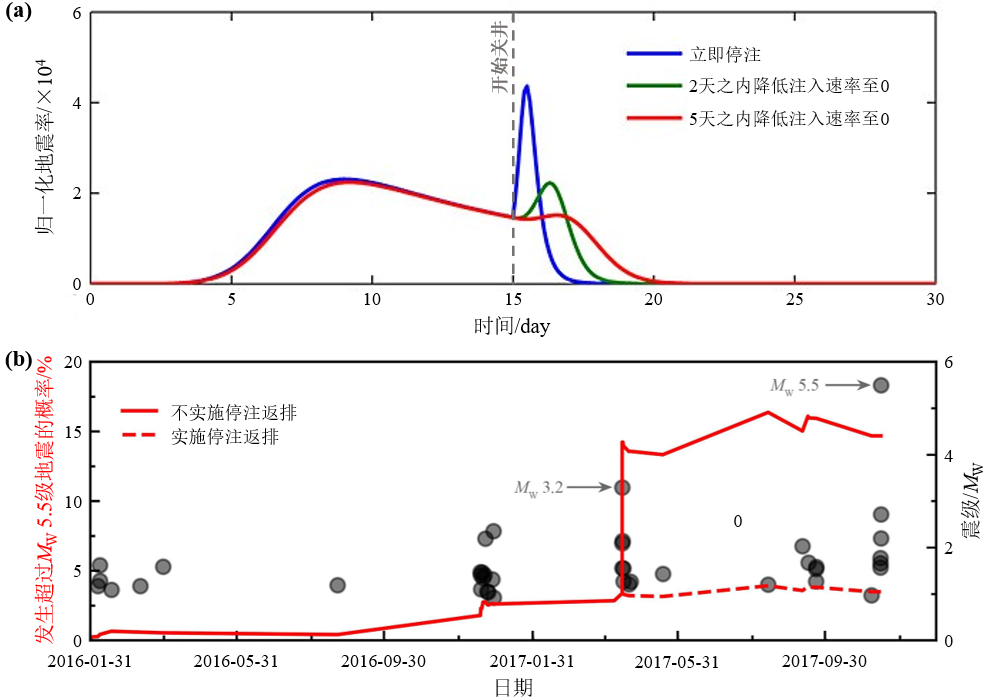
图20 关井方案对关井后诱发地震风险的影响
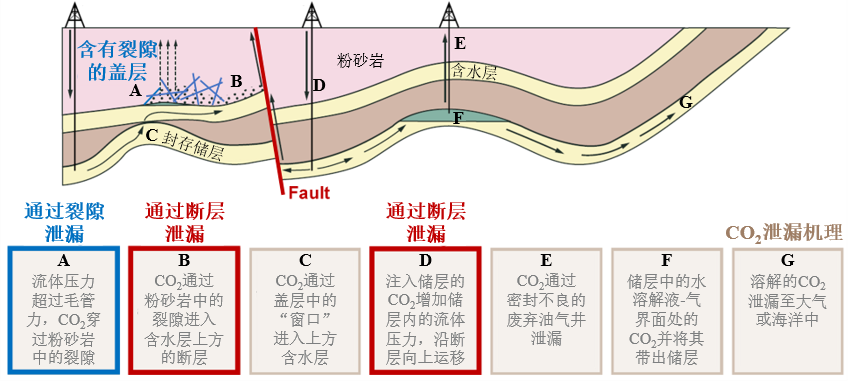
图21 封存的CO2 从储层中泄漏的各种方式
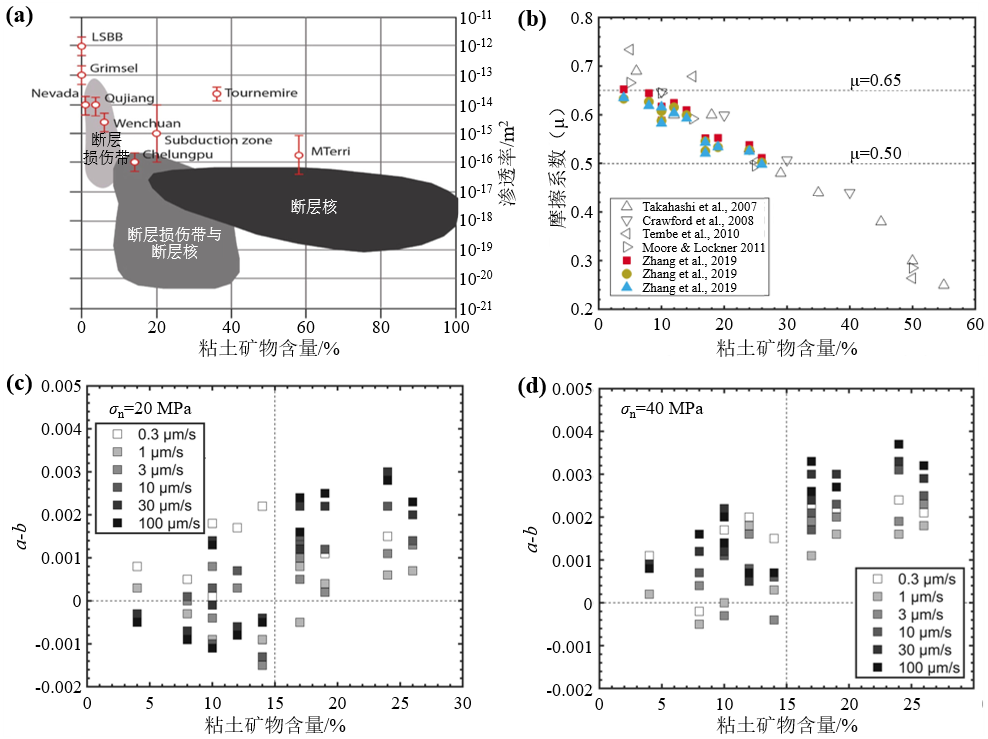
图22 粘土矿物含量对岩体界面稳定性和渗透率的影响
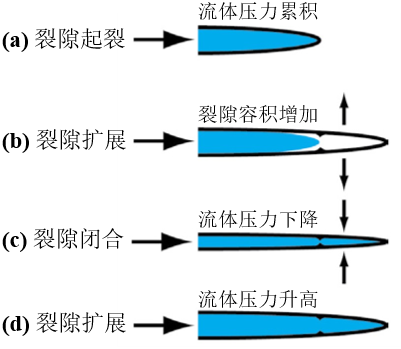
图23 水力裂隙起裂与扩展的粘裂模式示意图
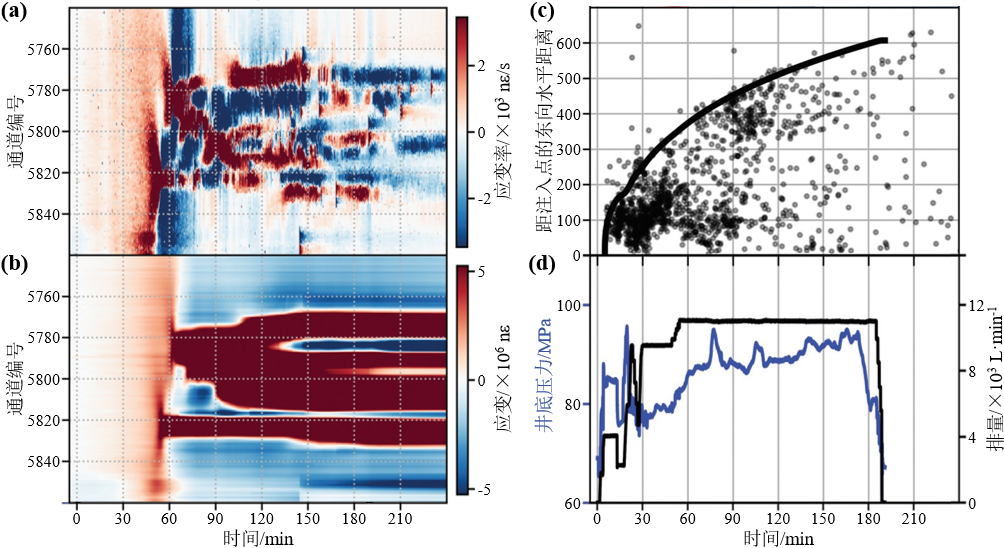
图25 美国Texas 州Delaware 盆地的现场大尺度第3 段水力压裂试验数据
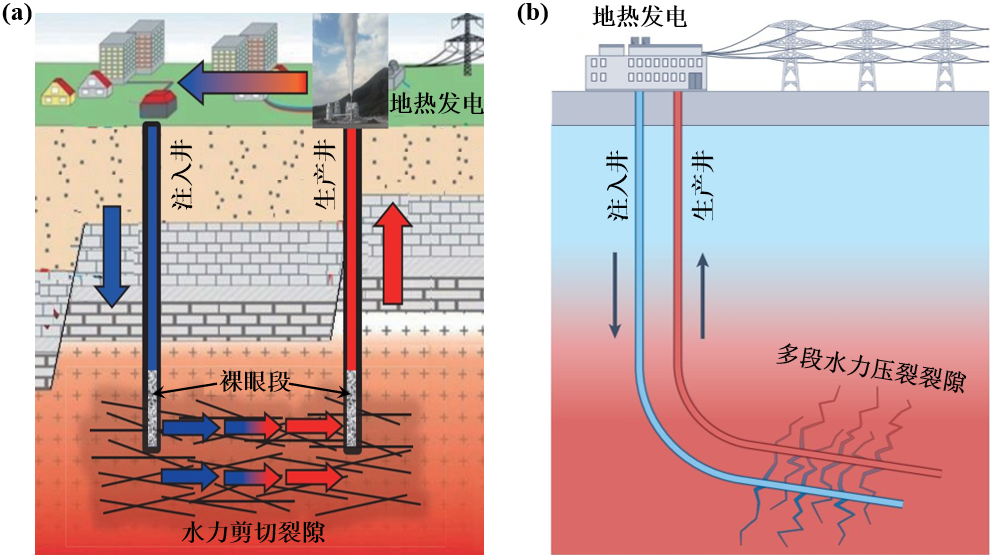
图26 深部地热储层中的(a)长裸眼段水力剪切 和(b)多段水力压裂
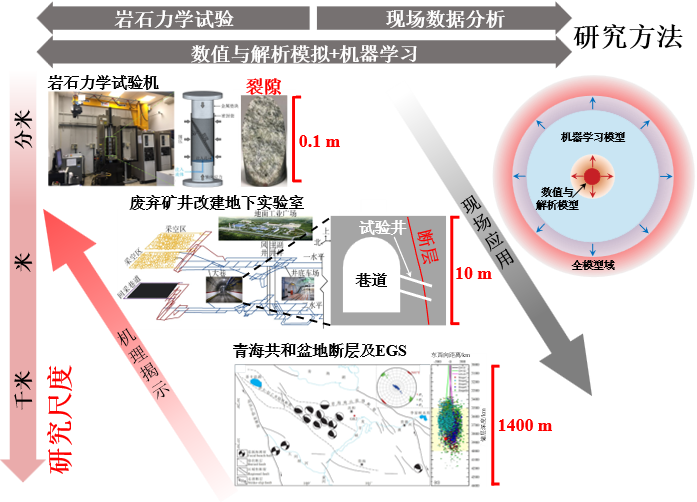
图27 深地工程中岩体界面摩擦-渗流耦合的多尺度、多方法综合研究
Mechanisms and control techniques of friction-permeability coupling in rock mass discontinuities in deep underground engineering: State of the art and future perspectives
Abstract: To address the challenges of global climate change, China has proposed the “dual carbon” strategic goal of “carbon peaking and neutrality”. Deep underground engineering, including deep underground energy exploitation, geological carbon dioxide sequestration, deep underground energy storage, and the reuse of abandoned mines, provides important techniques for achieving the “dual carbon” goal. Knowledge about the friction-permeability coupling evolution of fractures and faults, both of which are referred to as rock mass discontinuities in this manuscript, is of great significance for the safety and efficiency of deep underground engineering. Here, we present a state-of-the-art review on the coupling mechanisms and control techniques of the friction-permeability coupling of rock mass discontinuities. First, we briefly introduce the key roles of rock mass discontinuities in contemporary deep underground engineering. Second, basic theories related to the friction and permeability of rock mass discontinuities as well as their coupling mechanisms are systematically presented. Finally, we analyze the main mechanisms of seismicity occurrence induced by fluid injection and extraction, and elaborate on the mechanisms and challenges associated with the enhancement of reservoir permeability in deep underground energy exploitation and the leakage in deep underground fluid storage, alongside current control techniques. Based on recent progress, we propose several important issues to be investigated: the effects of clay on the friction-permeability coupling in rock mass discontinuities, the friction-permeability coupling in rock mass discontinuities under constant normal stiffness conditions, the stick-splitting mechanism of hydraulic fractures, etc. Additionally, multi-stage hydraulic fracturing, machine learning, and distributed optical fiber sensing may provide more efficient and intelligent solutions for predicting and controlling the reservoir permeability enhancement in deep underground energy exploitation, leakage risks in deep underground fluid storage, and induced seismic hazards in various deep underground engineering projects.
Key words: Carbon peaking and neutrality; Deep underground engineering; Rock mass discontinuity; Friction-permeability coupling; Fluid injection and extraction; Induced seismicity
冀胤霖, 张苏鹏, 朱鸿鹄, 等. 深地工程中岩体界面的摩擦-渗流耦合机理与调控技术:综述与展望[J]. 采矿与岩层控制工程学报. DOI: 10.13532/j.jmsce.cn10-1638/td.2025-1186
JI Yinlin, ZHANG Supeng, ZHU Honghu, et al. Mechanisms and control techniques of friction-permeability coupling in rock mass discontinuities in deep underground engineering: State of the art and future perspectives[J]. Journal of Mining and Strata Control Engineering. DOI: 10.13532/j.jmsce.cn10-1638/td.2025-1186